My responsibilities
Game design:
Designed the core loop and scoped the production to what the team could deliver in one week
Collaborated across art, sound, and programming on features throughout production
Championed ideas with the strongest potential during brainstorming and pre-production
Level design:
Prototyped level layouts from whiteboard planning through to greyboxing in Unity
Kept the level contained to a single stage to support both scope management and visual coherence
Design issue examples
Issue 1 - Scoping a first production under time pressure
Result:
The contained scope allowed the team to deliver a cohesive experience. The visual and auditory design came together around a clear theme, and the energy that might have gone into background lore went into the detail and atmosphere of the stage instead.
Problem:
One week of production time with a team that had never worked together before. Initial ambitions included extended background lore and elements beyond the core stage setting.
Solution:
The team agreed early to cut any lore that extended beyond what was visible in the game itself. Scope was reduced to what each discipline could realistically deliver, with the single-stage constraint serving both as a practical limit and a creative focus.
Issue 2 - Playtesting without external players

Result:
The controls became the defining feature of the game. When external playtesters experienced it, the reaction to the weird movement was immediate and positive. The lesson carried directly into TAWS, where the same movement system was built upon deliberately
Problem:
The short production window and location issues meant the team had to rely entirely on internal testing. With no external players, calibrating what was fun versus what the team had simply grown used to was difficult
Solution:
Rather than trying to balance a conventional set of mechanics, the team leaned heavily into the element that consistently produced a reaction in internal testing: the strange, puppet-like controls. The design priority became making that feeling as entertaining as possible rather than smoothing it away
Lessons Learned
Always watch for overscoping. Even in a one-week production with a tight brief, the initial scope was too ambitious. Recognising it early and cutting decisively was what allowed the rest to hold together.
A strong coherent theme can carry a simple core. The puppet theatre aesthetic, the gothic visual language and the audio design all made the game feel richer than its mechanics alone would suggest. Theme and feel are not decoration. They are part of the design.
Chasing the fun works. When internal testing consistently pointed to one element as the thing players responded to, committing to that and building everything else around it was the right call. The controls were strange, but they were the game.

A brief walk through the level design
1st step:
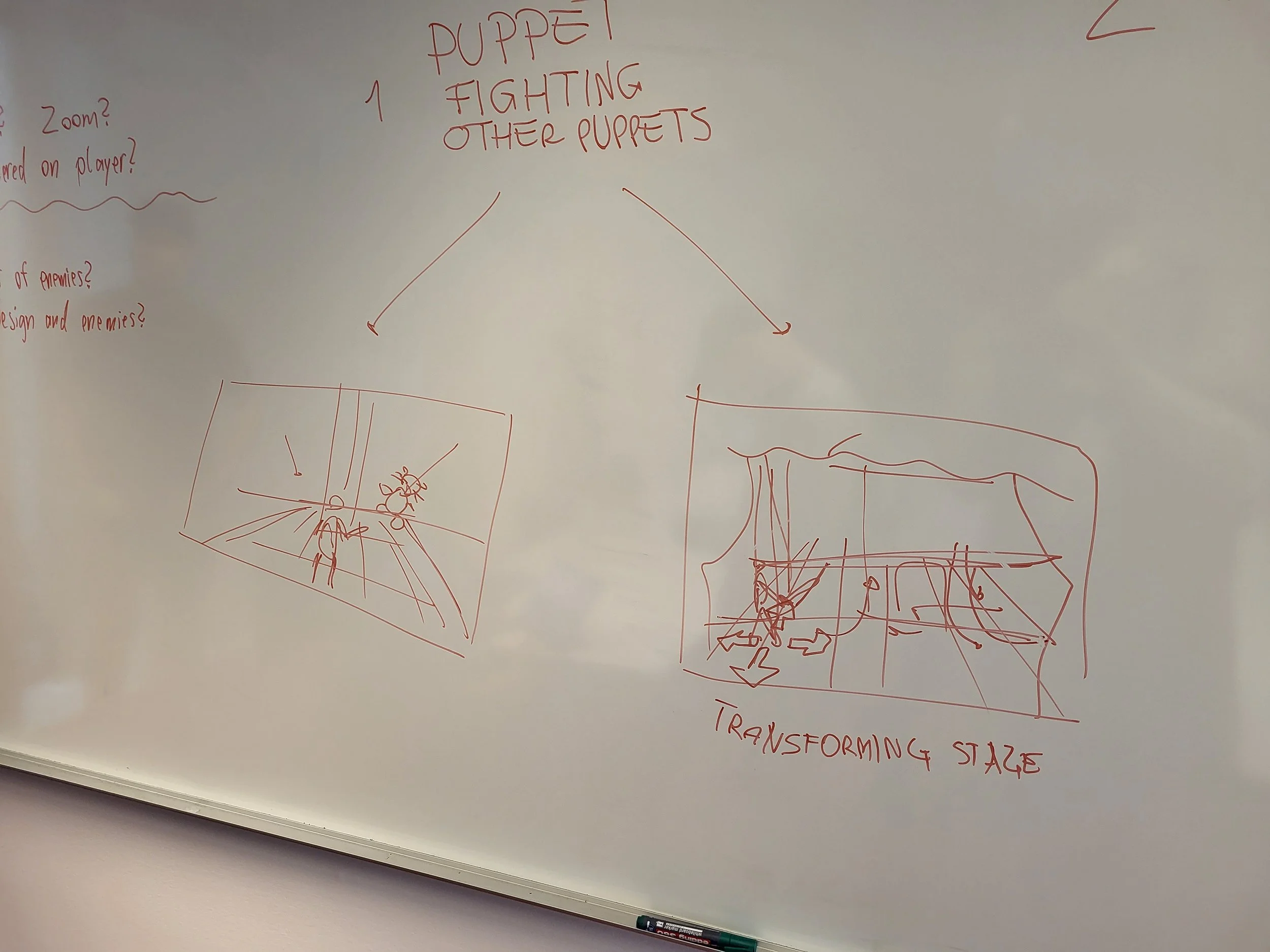
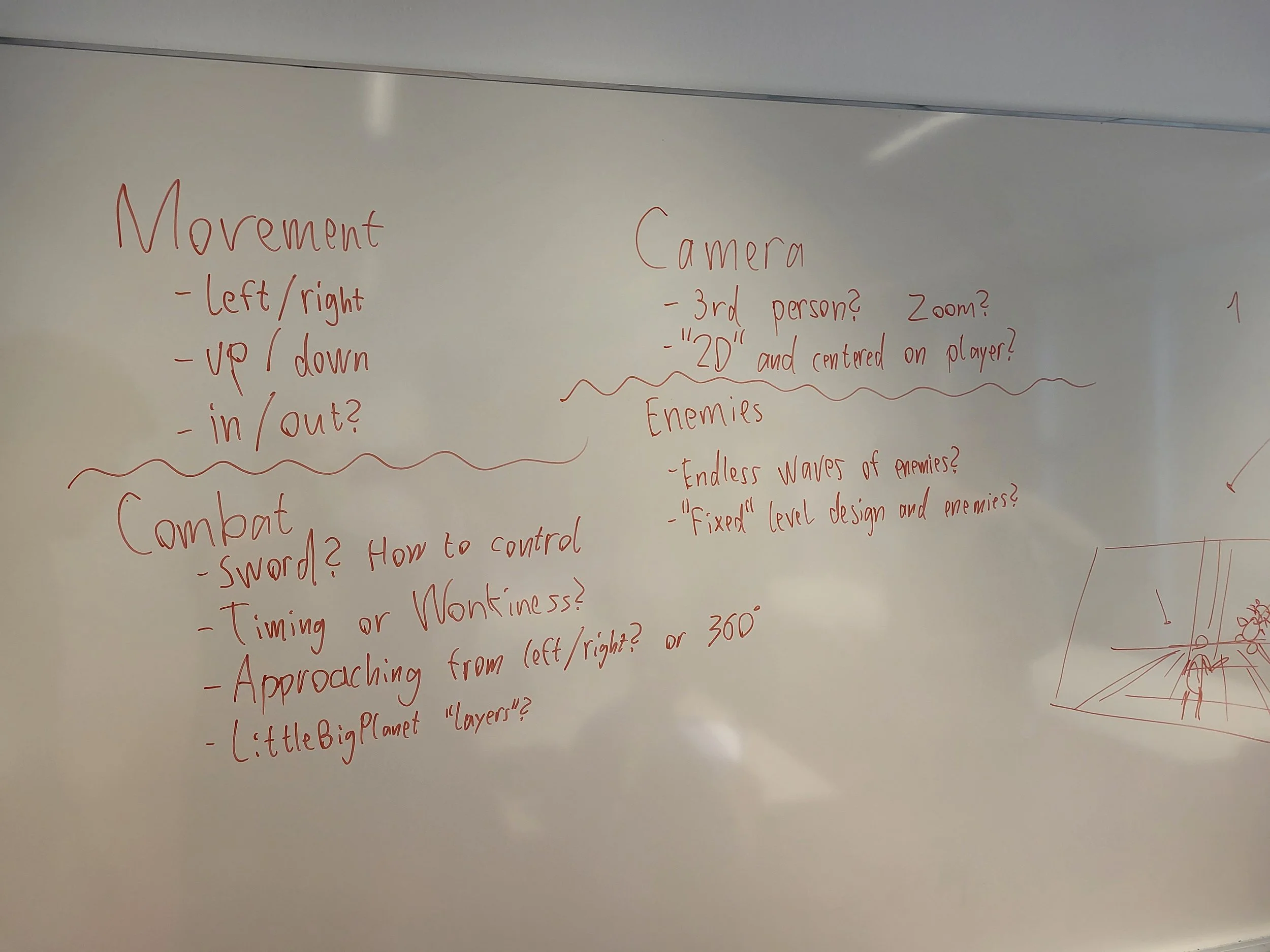
After settling on the theme we did some quick drawings to settle on what the main level would be.
2nd step:
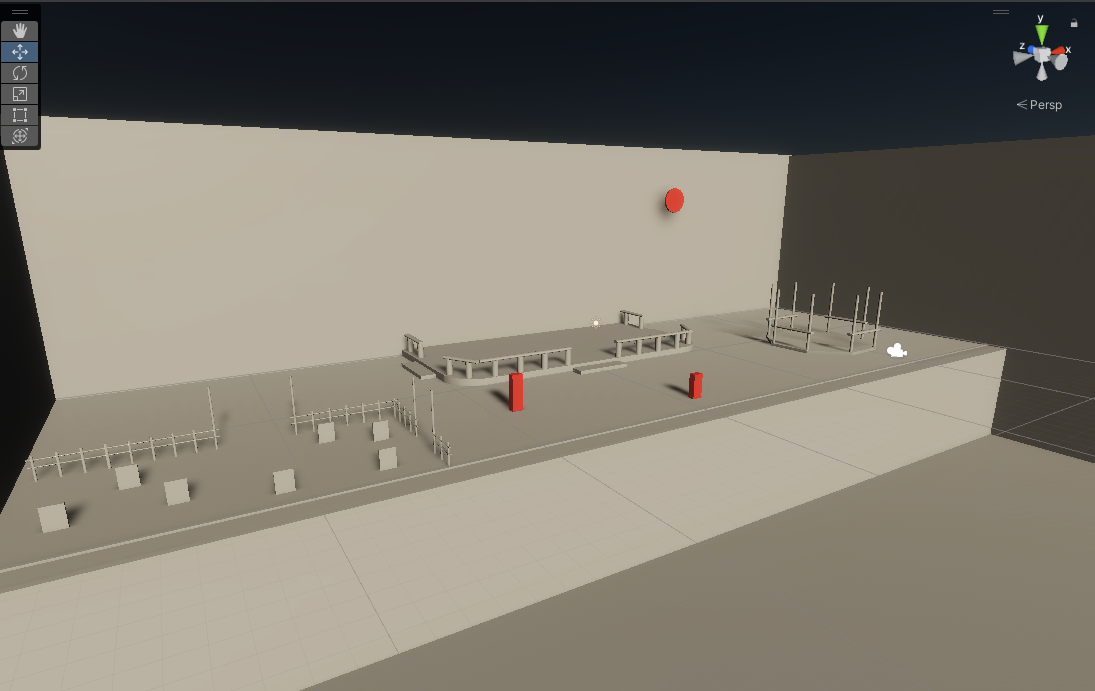
The greyboxing of the stage in which the location of the different elements and the player’s starting point was decided.
3rd step:
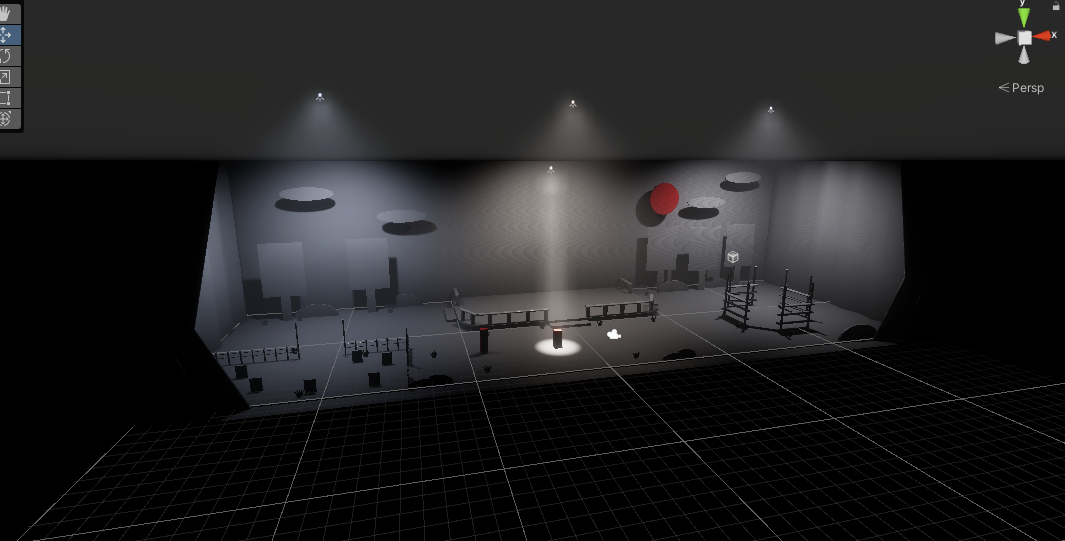
In collaboration with the art department the location of lights was placed, including testing how the main spotlight following the character would work.
4th step:
The assets from the art department were put in and any final adjustments to them were made if needed.